Educational asbestos exposure resource
Occupations at Risk for Asbestos Exposure
Many workers encountered asbestos because it was used in insulation, construction materials, mechanical systems, shipyards, industrial equipment, fire-resistant products, and building renovation work.
Plain-English occupational exposure education
This page explains why certain jobs and work settings historically had greater potential for asbestos exposure, including pipefitting, boiler work, shipyard work, construction renovation, maintenance, insulation work, and industrial trades.
MesotheliomaClaims.us is not a law firm and does not provide legal or medical advice. This content is intended for general educational purposes only.
Why certain occupations had higher exposure risk
Certain occupations had higher asbestos exposure risk because workers regularly installed, repaired, removed, cut, drilled, sanded, scraped, demolished, or worked near materials that historically contained asbestos. Many workers did not handle raw asbestos directly. Instead, exposure could occur while working around older insulation, boilers, piping systems, gaskets, packing materials, floor tile, ceiling products, fireproofing, roofing, siding, or cement products.
Occupational exposure was often connected to the type of facility and the task being performed. Industrial plants, shipyards, power plants, refineries, older schools, hospitals, commercial buildings, and manufacturing facilities often contained mechanical systems and building materials where asbestos was historically used. Workers performing maintenance, renovation, demolition, repair, or equipment service could disturb those materials and potentially release airborne fibers.
Risk also depended on the time period, ventilation, material condition, work methods, frequency of exposure, and whether protective controls were used. In earlier decades, many workers were not fully informed about asbestos hazards, and dust-producing work was often performed without modern containment, respiratory protection, regulated work practices, or air monitoring.
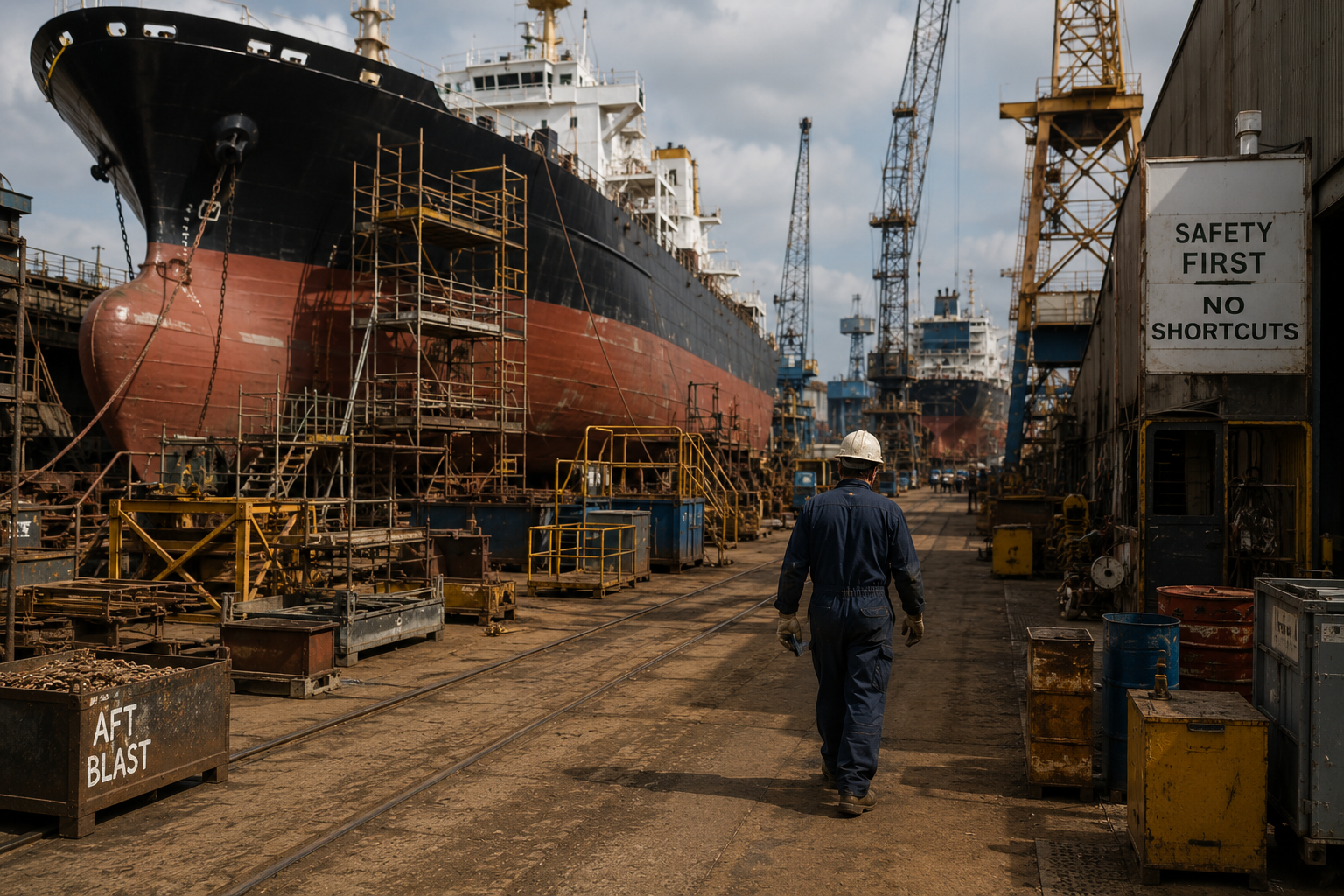
Shipyard workers
Shipyards have historically been associated with asbestos exposure because ships commonly used heat-resistant and fire-resistant materials in engine rooms, boiler spaces, piping systems, bulkheads, insulation, pumps, valves, and mechanical equipment. Ship repair and overhaul work could disturb insulation and other materials in tight or poorly ventilated spaces.
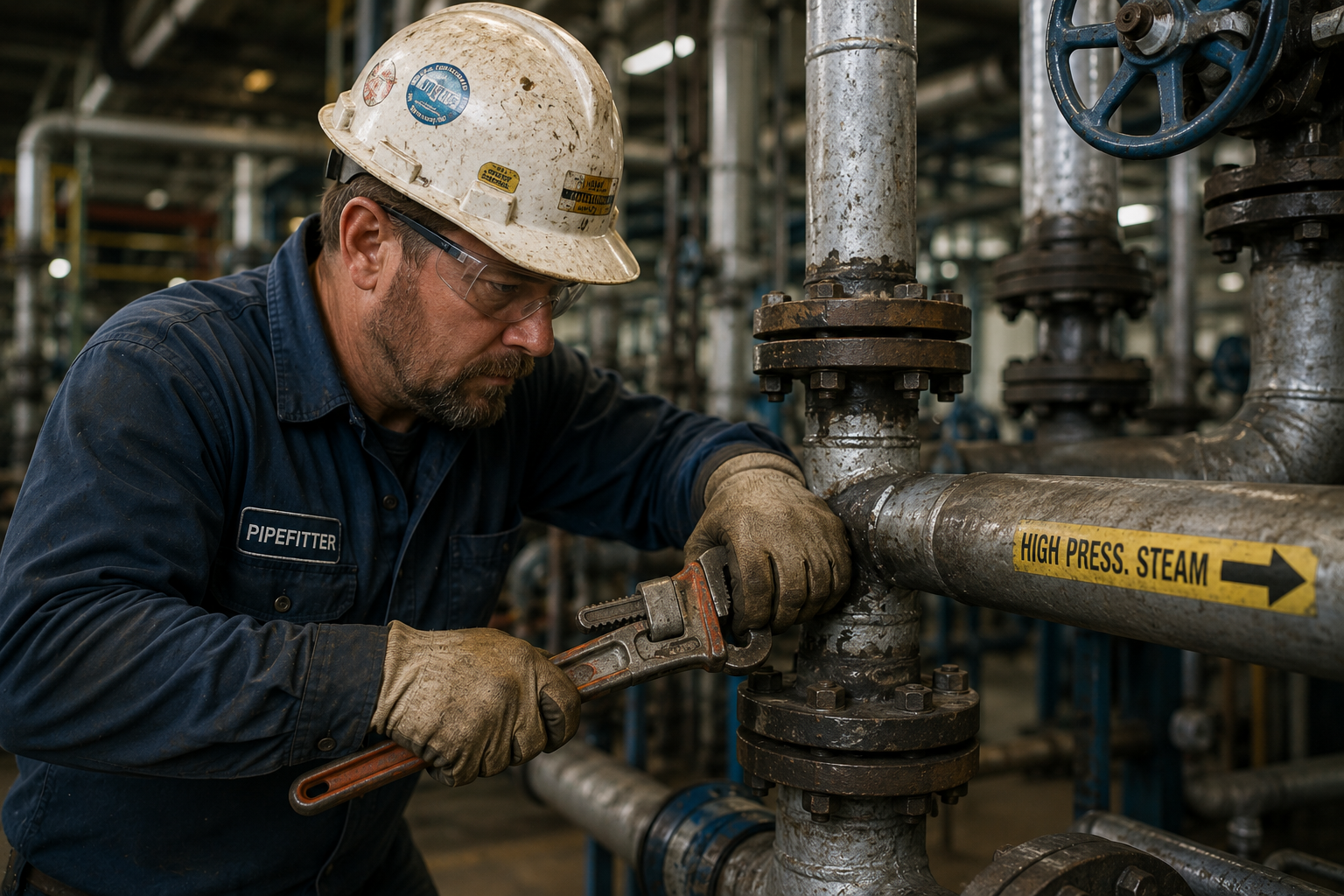
Pipefitters, plumbers, and mechanical trades
Pipefitters and plumbers often worked around insulated piping, valves, elbows, flanges, steam lines, condensate lines, and mechanical equipment. Even when the primary task involved metal pipe or fittings, older insulation and gaskets could be disturbed during repair, removal, valve replacement, or system modification work.
These trades may also have worked alongside insulators, boiler workers, maintenance staff, or demolition crews, creating potential bystander exposure when nearby work disturbed asbestos-containing materials.
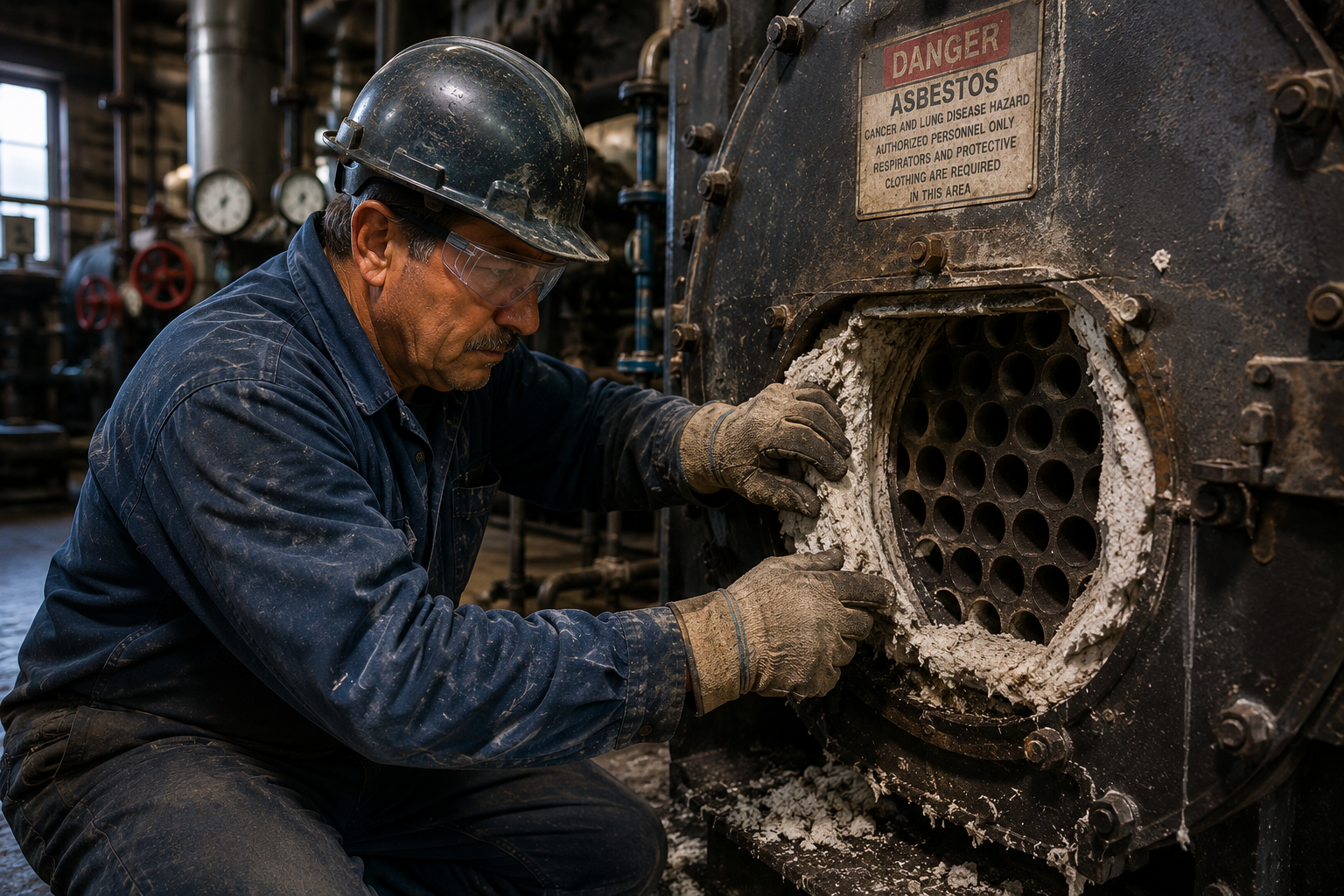
Boiler workers and high-temperature equipment
Boiler workers, operators, and maintenance employees often worked near equipment where asbestos was historically used for thermal insulation and fire resistance. Boiler jackets, doors, refractory materials, breeching, pipe insulation, valves, gaskets, packing, and related components could contain asbestos depending on the age and construction of the system.
Boiler work could involve scraping, removing, repairing, replacing, or disturbing worn materials. In older facilities, maintenance activities around boilers and steam systems were a frequent reason to evaluate suspect asbestos-containing materials.
Construction renovation and demolition workers
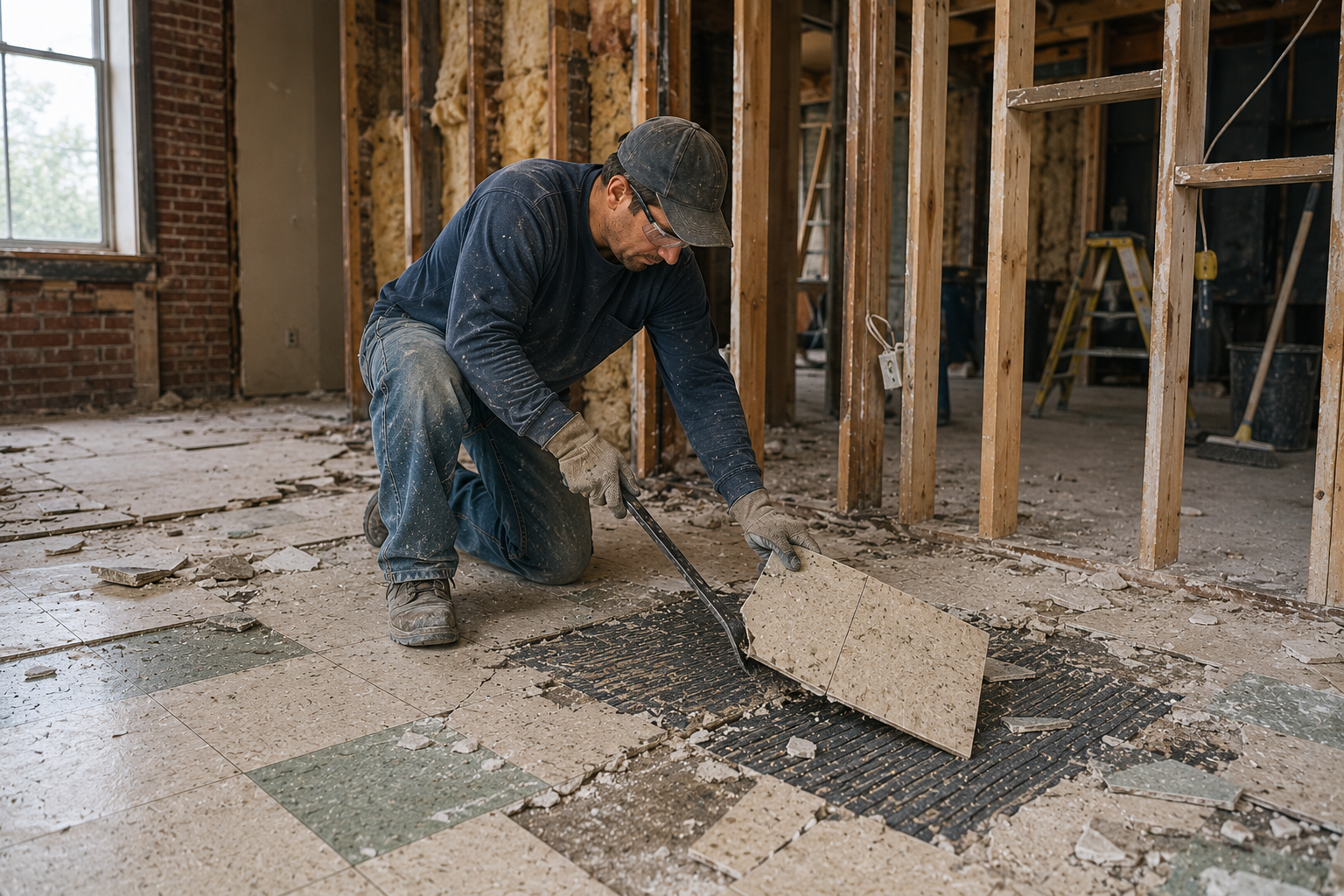
Construction, renovation, and demolition workers could encounter asbestos when older building materials were disturbed. Potential materials included floor tile, mastic, pipe insulation, drywall joint compound, plaster, ceiling texture, roofing, siding, cement board, transite panels, fireproofing, and mechanical insulation.
Renovation projects were especially important because asbestos materials can remain hidden beneath newer finishes. A building may appear updated while older flooring, pipe insulation, ceiling materials, or wall materials remain underneath or behind newer construction layers.
Other occupations historically associated with asbestos exposure
Secondary and bystander exposure
Some people were exposed even though they were not the primary worker handling asbestos-containing materials. Bystander exposure could happen when nearby trades worked in the same room, ship compartment, mechanical area, construction zone, boiler room, or industrial work area where asbestos-containing materials were being disturbed.
For example, an electrician, laborer, painter, welder, mechanic, or maintenance employee could be working nearby while insulation was removed, flooring was scraped, fireproofing was disturbed, or equipment was repaired. In shared work environments, airborne dust did not always stay limited to the worker performing the task.
Take-home exposure was another concern. Fibers could be carried on work clothing, boots, hair, tools, vehicles, or laundry. Family members may have encountered dust when handling contaminated clothing or being around workers after dusty tasks. This is one reason exposure history research often includes both direct workplace tasks and indirect exposure scenarios.
Reminder: This content is for general education only. MesotheliomaClaims.us is not a law firm, does not provide legal advice, and does not provide medical advice.