
Educational asbestos exposure resource
Asbestos in Schools and Public Buildings
Older school buildings and public facilities often contained asbestos-containing materials in floor tile, pipe insulation, boiler rooms, ceiling materials, mechanical spaces, roofing, and other building systems.
Plain-English school asbestos education
This page explains why asbestos became a concern in older school buildings, where asbestos-containing materials were commonly found, and how AHERA-style inspection and management planning helped organize building information.
MesotheliomaClaims.us is not a law firm and does not provide legal, medical, inspection, sampling, or abatement advice. This page is for general education only.
Why asbestos became a school concern
Asbestos became a major concern in schools because many school buildings were constructed, expanded, or renovated during decades when asbestos-containing materials were commonly used. These materials were not limited to one part of a building. They could appear in classrooms, hallways, boiler rooms, pipe chases, maintenance areas, ceilings, roofs, crawlspaces, and mechanical spaces.
Schools often used durable and fire-resistant building products because they needed materials that could handle heavy use, long service life, temperature changes, and public occupancy. Asbestos was historically added to some flooring, insulation, fireproofing, ceiling products, roofing materials, cement products, and mechanical system components because it provided strength, heat resistance, and fire-resistant properties.
The concern was not simply that older materials were present. The concern became greater when materials were damaged, deteriorated, friable, or disturbed during maintenance, renovation, demolition, repair, or mechanical work. Schools also required careful communication because students, teachers, custodial staff, maintenance workers, contractors, and visitors may all occupy or pass through the same buildings.
Common school locations
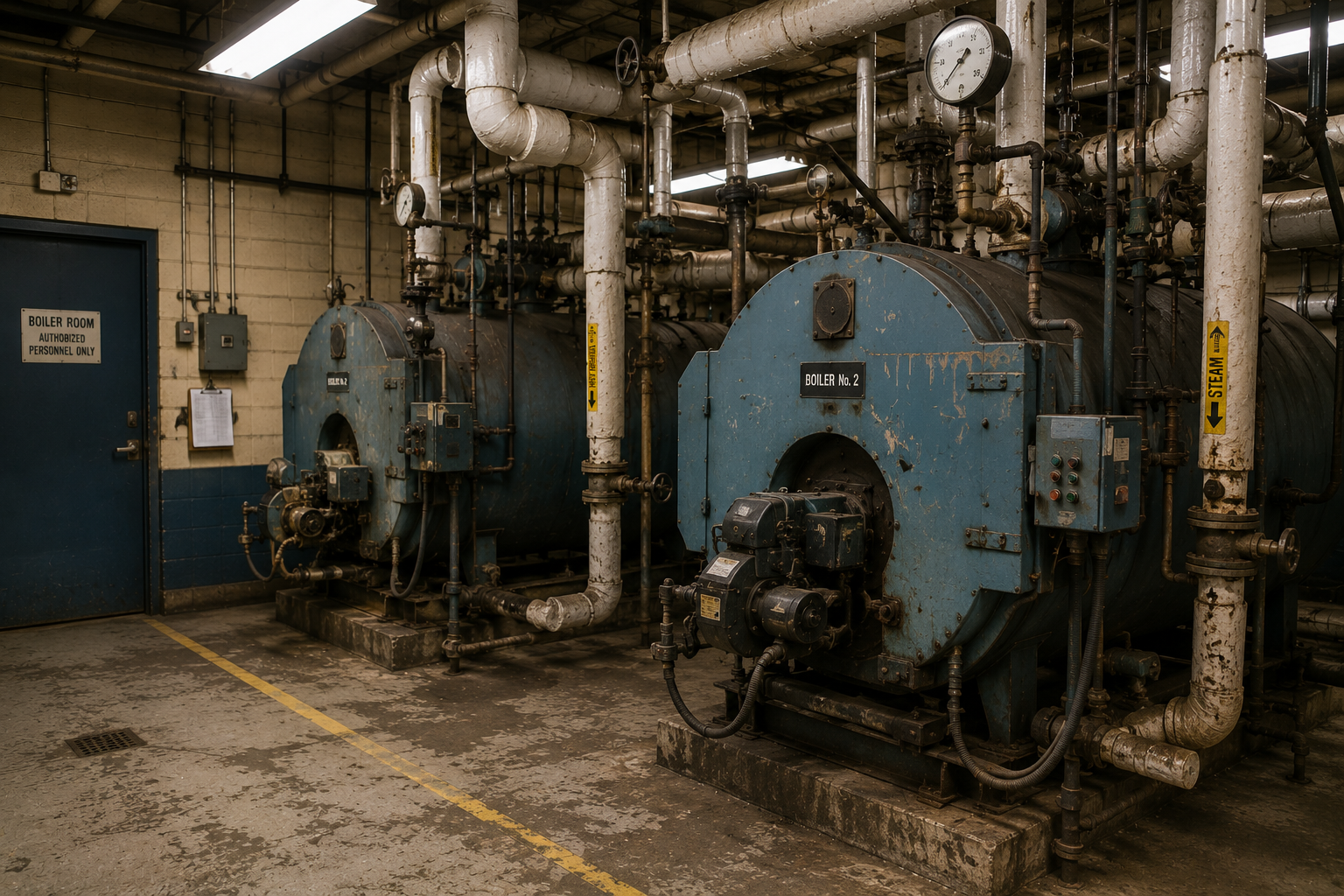
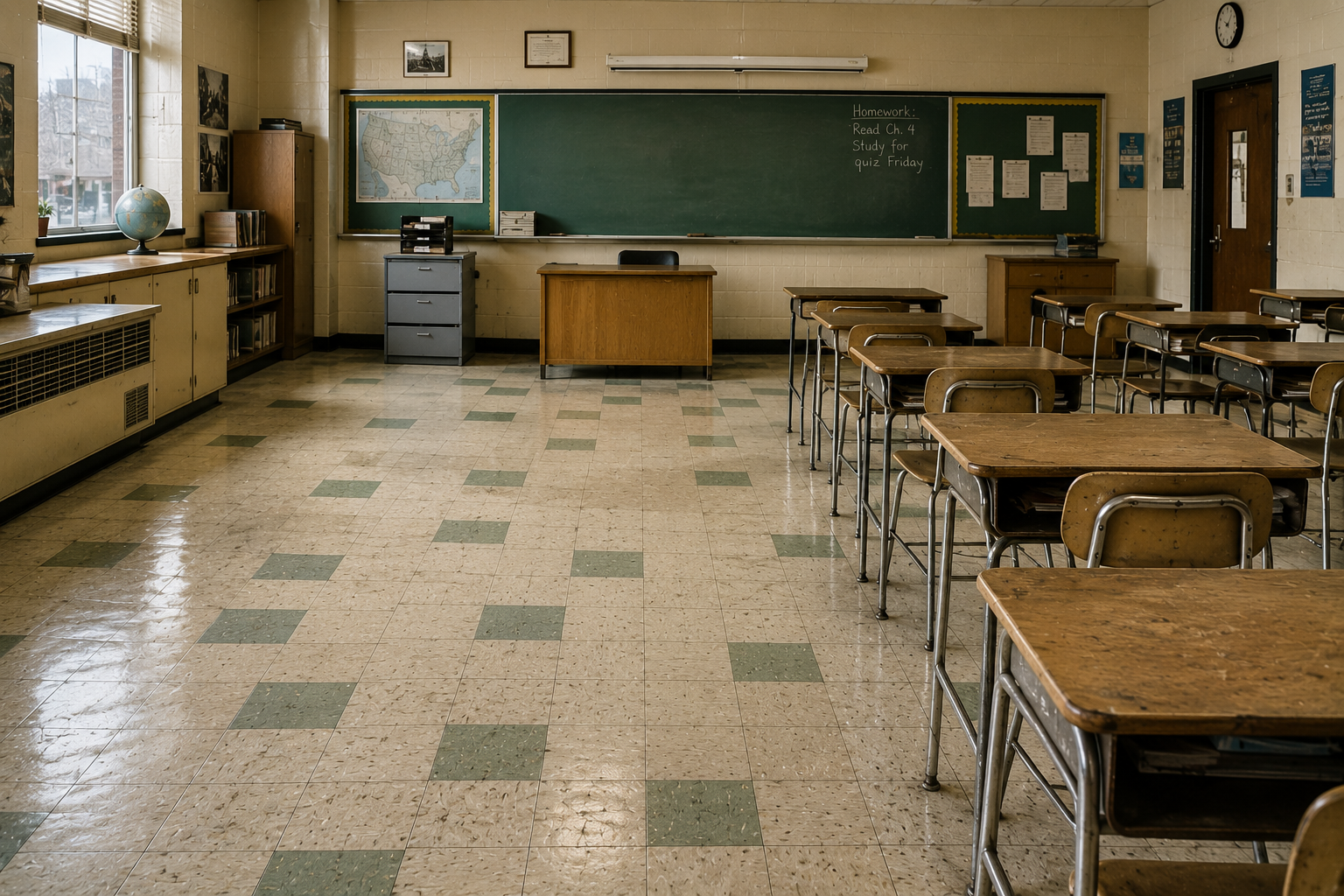
Asbestos-containing materials in schools were often found in areas that supported building operations, as well as in everyday occupied spaces. A classroom may have floor tile or ceiling materials, while a nearby mechanical room may contain pipe insulation, boiler components, or older gaskets and packing.
- Boiler rooms and mechanical equipment rooms
- Pipe chases, utility tunnels, and crawlspaces
- Classrooms with older vinyl floor tile or mastic
- Hallways, cafeterias, offices, and public areas
- Ceiling texture, plaster, joint compound, and sprayed materials
- Roofing, flashing, siding, cement board, and transite products
- Custodial closets, maintenance shops, and storage areas
Pipe chases and hidden mechanical spaces
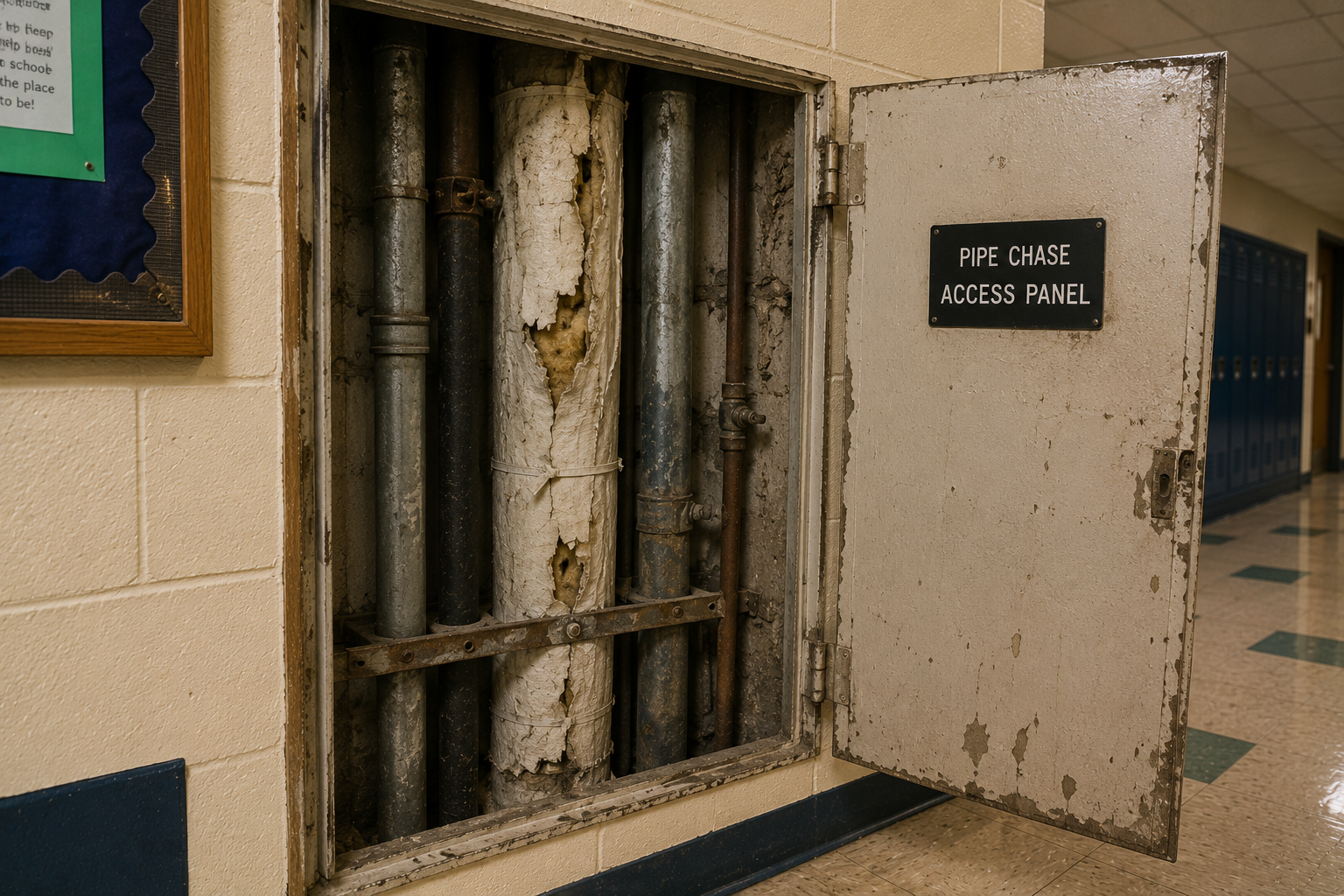
Pipe chases and concealed mechanical spaces were important in school asbestos inspections because they could contain older insulation that was not visible in normal occupied areas. These spaces may run behind walls, above ceilings, between floors, or through service corridors.
A school building may appear modern in classrooms and corridors while older thermal system insulation remains hidden in access panels, pipe chases, tunnels, or mechanical rooms. This is one reason inspections often included both visible spaces and accessible concealed areas.
Educational purpose of management plans
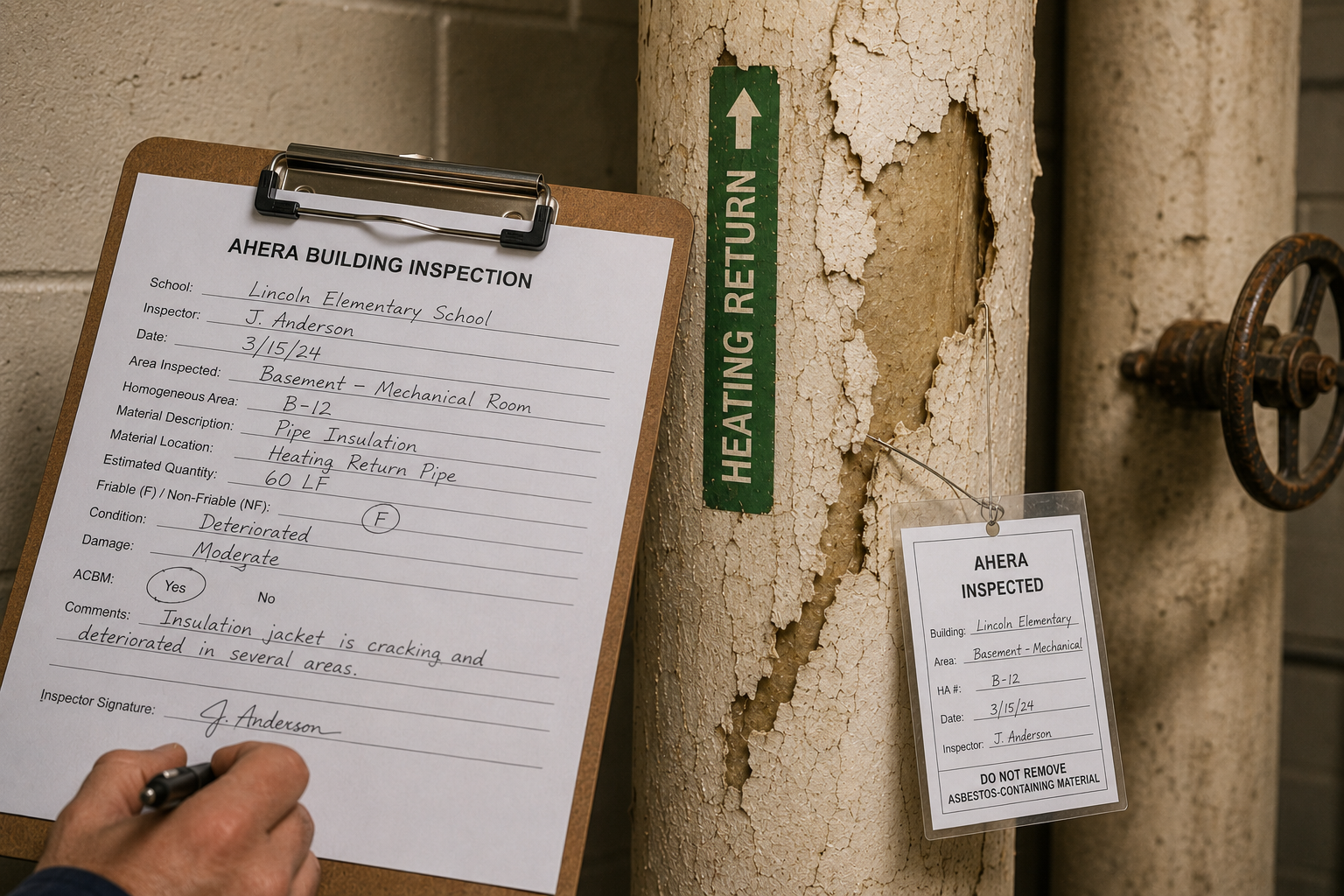
AHERA-style management plans were created to organize information about known or assumed asbestos-containing building materials in schools. The purpose was not simply to create a file. A management plan helped document where materials were located, what condition they were in, how they should be managed, and what response actions or surveillance activities may be appropriate.
A school asbestos management plan could include inspection results, material locations, homogeneous material areas, laboratory sample results, condition assessments, response action records, periodic surveillance, reinspection information, worker notifications, and operations-and-maintenance guidance. This information helped school officials, maintenance personnel, contractors, and inspectors understand which materials required attention before renovation or maintenance work occurred.
Management planning was especially important because asbestos-containing materials could remain in place if they were intact and properly managed. In many cases, the goal was to avoid unnecessary disturbance, monitor material condition, inform workers before maintenance or renovation, and use proper procedures when response actions were needed.
Common misunderstandings about asbestos in schools
- Not every older school material contains asbestos.
- Visual appearance alone is not reliable for confirmation.
- Some materials may remain in place if they are intact and properly managed.
- Renovation and maintenance work should account for hidden materials.
- Management plans help organize building information and reduce accidental disturbance.
Reminder: This content is for general education only. MesotheliomaClaims.us is not a law firm, does not provide legal advice, and does not provide medical advice.