
Educational asbestos exposure resource
Asbestos Pipe Insulation
Pipe insulation was one of the most common asbestos-containing materials in older mechanical systems, boiler rooms, hospitals, schools, commercial buildings, utility tunnels, and industrial facilities.
Plain-English asbestos education
This page explains why asbestos was historically used on pipes and mechanical systems, where pipe insulation was commonly found, and how disturbance of older insulation could create exposure concerns.
MesotheliomaClaims.us is not a law firm and does not provide legal or medical advice. This information is provided for general educational purposes only.
Why asbestos was used on pipes
Asbestos was widely used on piping systems because it performed well in areas exposed to heat, steam, condensation, vibration, and mechanical wear. Older steam lines, hot water lines, condensate lines, boiler piping, and process piping often needed insulation that could withstand high temperatures while reducing heat loss.
In many older buildings and industrial facilities, pipe insulation helped improve energy efficiency, protect workers from hot surfaces, reduce condensation, and provide fire-resistant protection around mechanical systems. Because asbestos fibers were strong, heat-resistant, and relatively inexpensive, asbestos was added to many thermal system insulation products used around pipes, elbows, fittings, valves, boilers, tanks, and ducts.
Pipe insulation was not always limited to visible mechanical rooms. It could also be present above ceilings, inside pipe chases, in crawlspaces, beneath floors, in utility tunnels, behind walls, and in older service corridors. That is why asbestos inspections often focused on both visible and hidden mechanical system pathways.
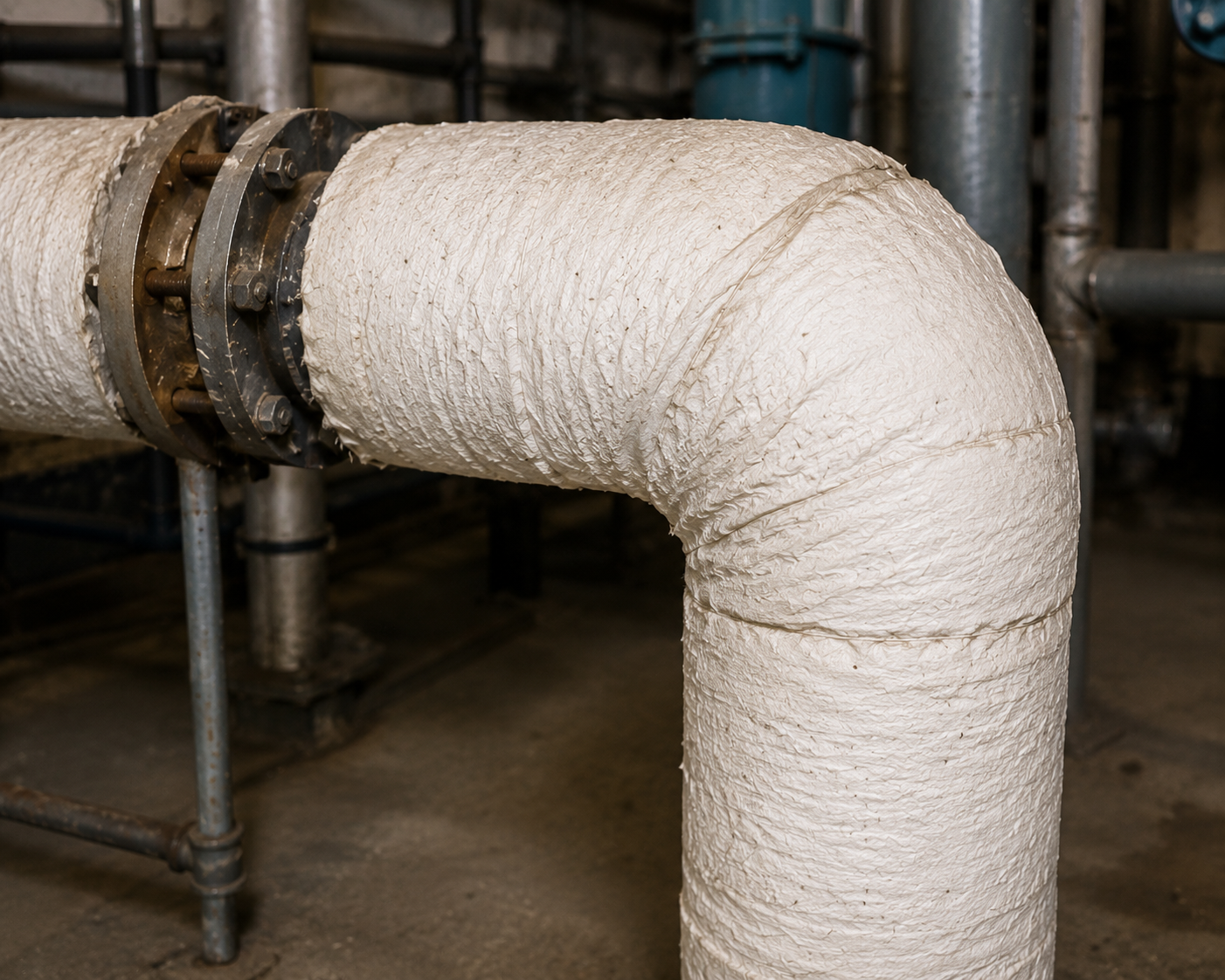
Where asbestos pipe insulation was commonly found
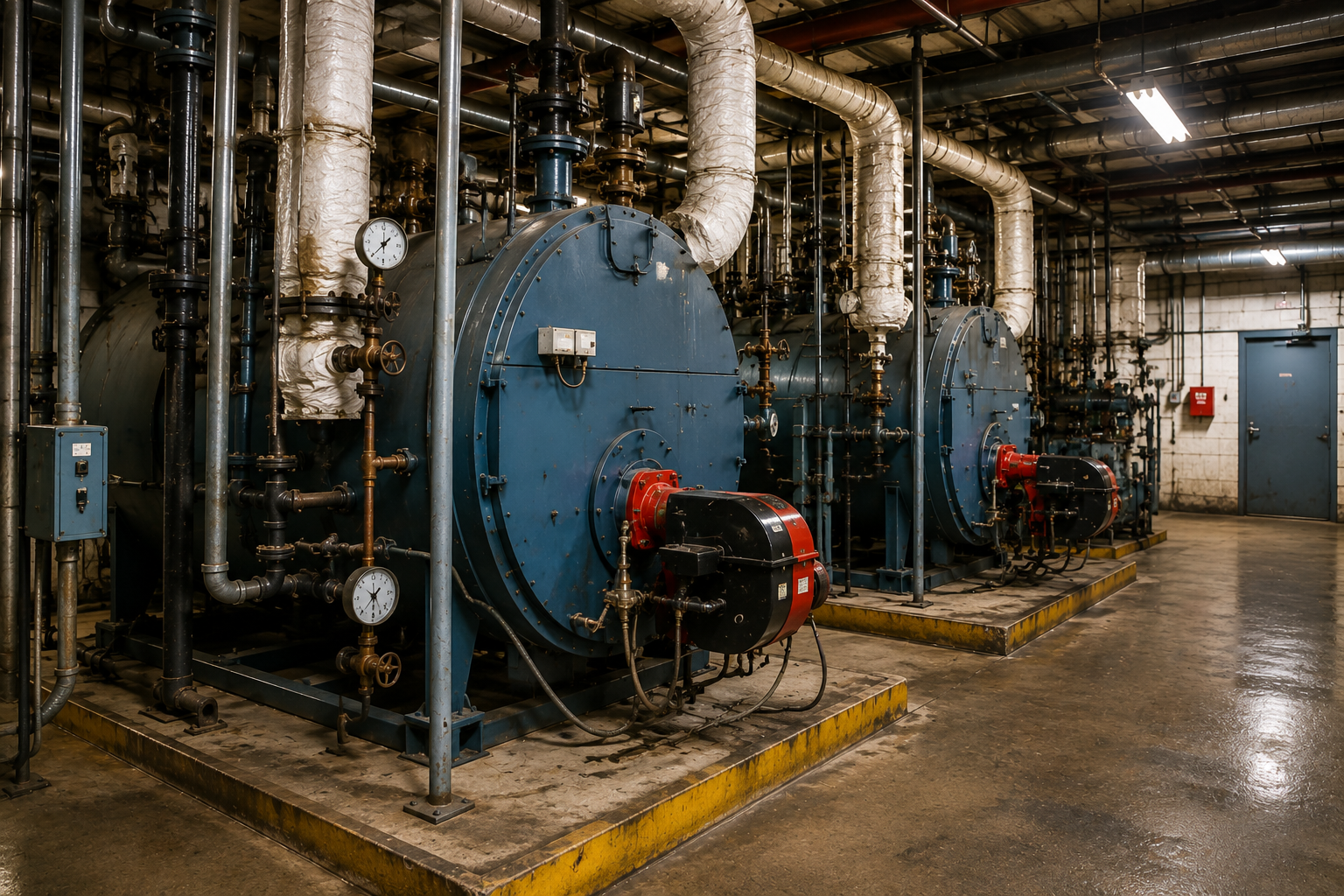
Asbestos pipe insulation was commonly associated with mechanical systems that carried steam, hot water, condensate, or other heated materials. The highest-use areas were often older mechanical rooms, boiler rooms, utility tunnels, service corridors, and industrial process areas.
- Steam lines and condensate return lines
- Boiler rooms and mechanical equipment rooms
- Hospitals, schools, universities, and public buildings
- Industrial plants, refineries, and manufacturing facilities
- Utility tunnels, pipe chases, crawlspaces, and service corridors
- Older commercial buildings and institutional facilities
- Valves, elbows, flanges, fittings, and pipe penetrations
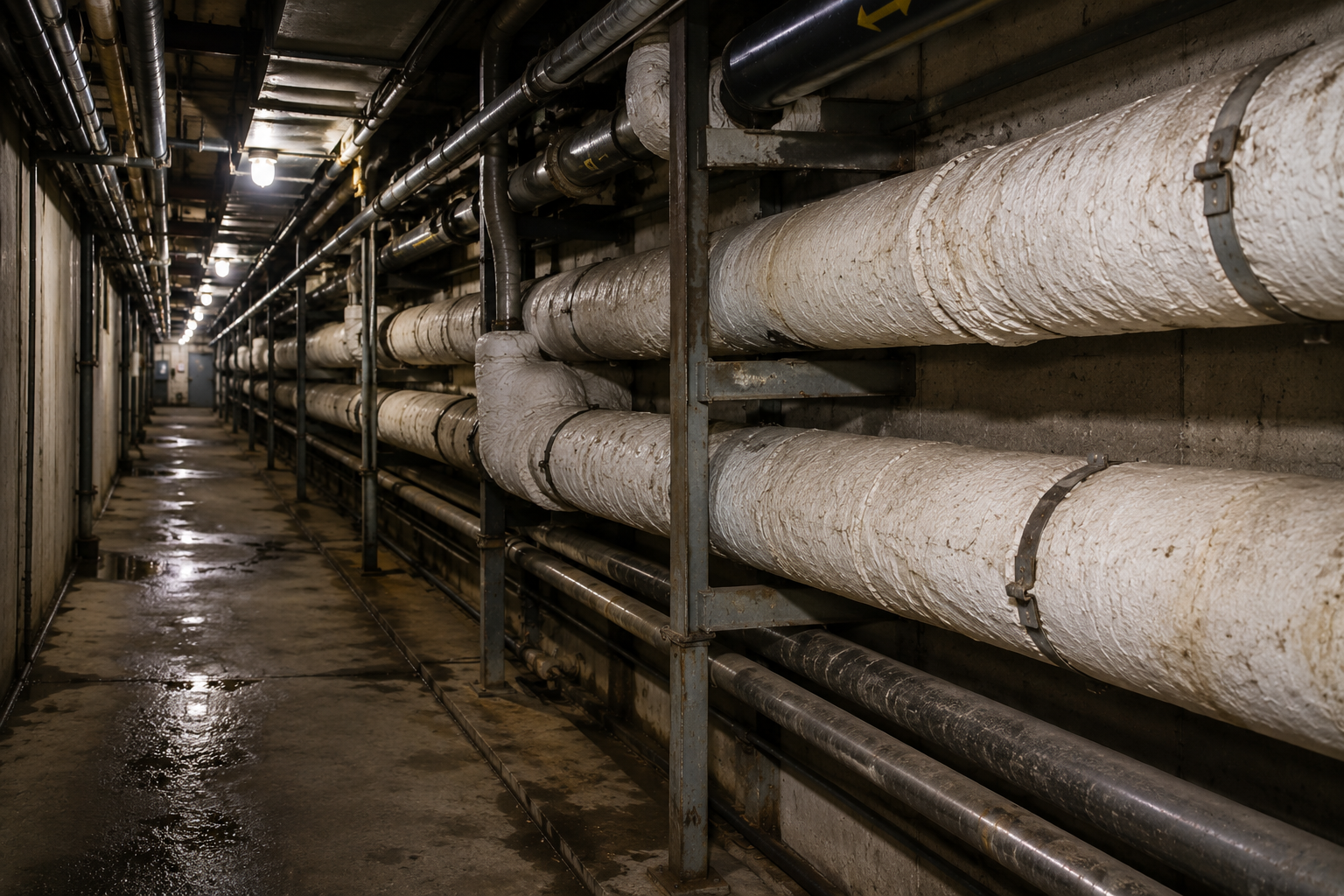
Utility tunnels and hidden pipe runs
Utility tunnels and service corridors were especially important in schools, hospitals, campuses, and large institutional facilities. These areas often contained long runs of insulated piping serving multiple buildings or building sections. Because they were not public-facing spaces, older insulation could remain in place for decades.
Hidden pipe runs can make asbestos identification more difficult. A building may appear renovated in occupied areas while older insulation remains above ceilings, in tunnels, or inside wall cavities. This is one reason professional asbestos inspections often included mechanical areas and accessible concealed spaces.
How exposure could happen
Potential exposure concerns often occurred when asbestos-containing insulation was cut, removed, repaired, damaged, scraped, torn, or otherwise disturbed. Maintenance, renovation, demolition, and abatement work could release airborne fibers if proper controls were not used.
People who may have worked around older pipe insulation included insulators, pipefitters, plumbers, boiler workers, maintenance employees, electricians, demolition workers, renovation contractors, facility personnel, and industrial workers. In some situations, nearby workers may also have experienced bystander exposure when insulation work occurred in the same area.
Reminder: This content is for general education only. MesotheliomaClaims.us is not a law firm, does not provide legal advice, and does not provide medical advice.