
Educational asbestos exposure resource
Asbestos Floor Tiles and Black Mastic
Older vinyl floor tiles, sheet flooring, and black mastic adhesives were common building materials in schools, hospitals, offices, public buildings, commercial properties, and older homes.
Plain-English asbestos flooring education
This page explains why asbestos was historically used in flooring products, where asbestos floor tile and mastic were commonly found, and why disturbance during renovation or removal can create exposure concerns.
MesotheliomaClaims.us is not a law firm and does not provide legal, medical, inspection, or abatement advice. This information is for general education only.
Why asbestos was used in flooring
Asbestos was historically added to certain resilient flooring products because it helped improve strength, durability, dimensional stability, and heat resistance. Vinyl composition tile, asphalt tile, sheet flooring backing, and adhesive products were often installed in buildings that needed long-lasting surfaces for heavy foot traffic.
Schools, hospitals, offices, retail spaces, government buildings, apartment buildings, and older homes commonly used resilient tile because it was affordable, easy to clean, and could withstand years of use. In many cases, the flooring system included more than one suspect material: the tile itself, the adhesive beneath it, and sometimes leveling compounds, backing layers, or older underlayment materials.
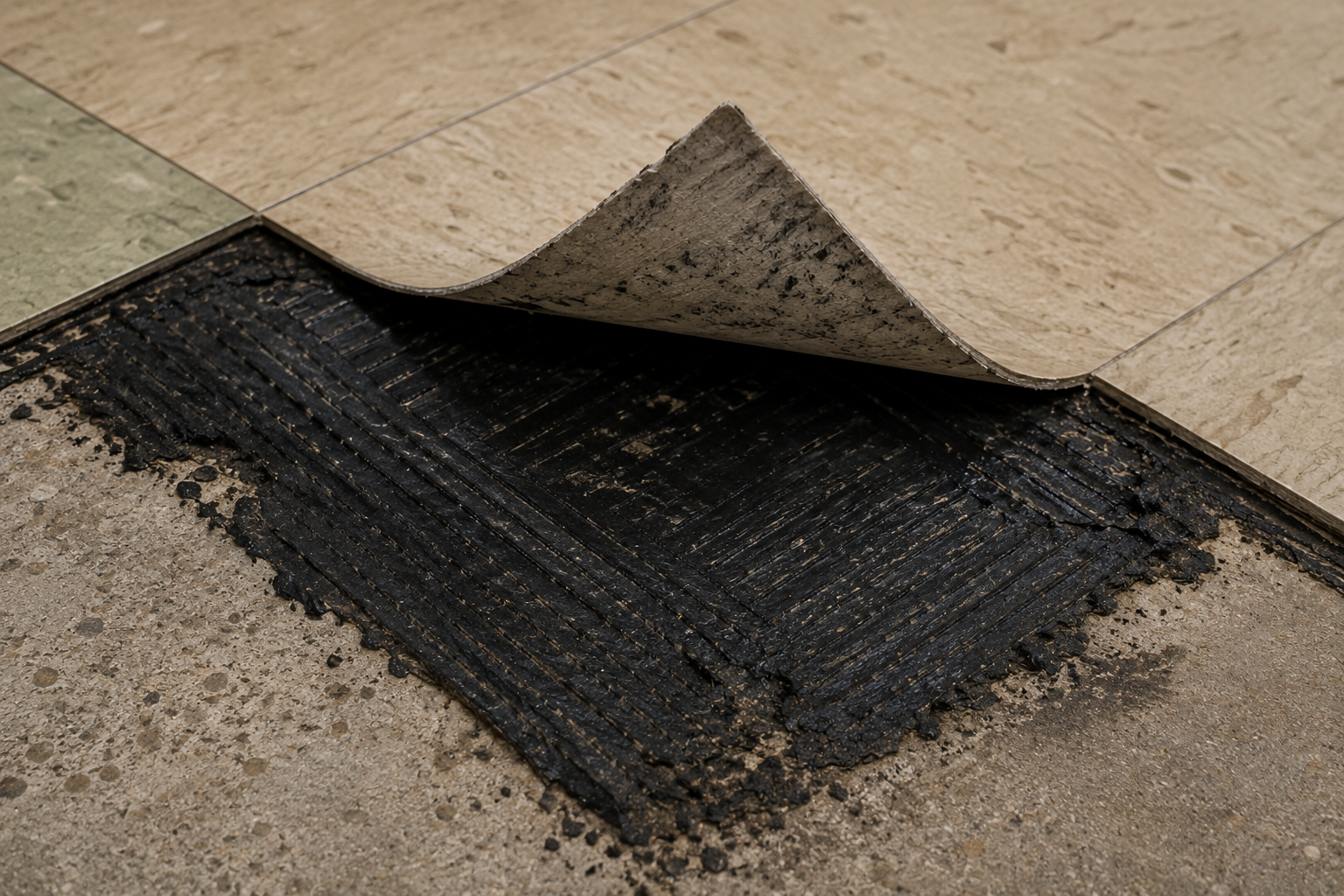
The adhesive beneath older tile is often called mastic. Black mastic adhesives were widely used beneath floor tile and sheet flooring. Some black mastics historically contained asbestos and could remain bonded to concrete or subfloor materials long after the original tile was installed.
Older 9x9 tile and visual clues
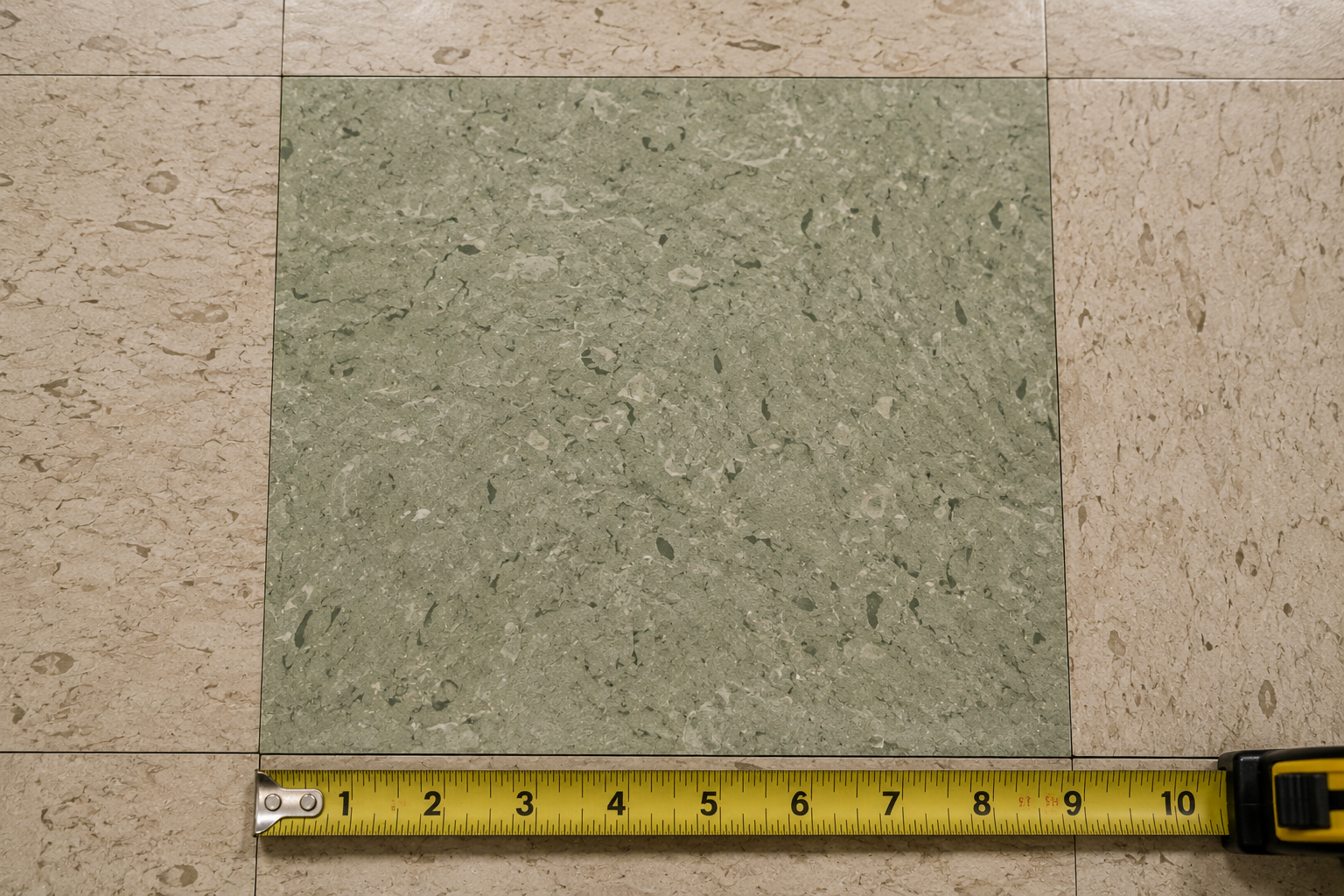
Many people associate older 9-inch by 9-inch floor tile with possible asbestos content. While certain older 9x9 tiles did contain asbestos, tile size alone does not confirm asbestos content. Some 12-inch tile, sheet flooring, and other resilient flooring products may also be suspect depending on age, manufacturer, and material type.
Visual clues can help identify materials that deserve further review, but they are not a substitute for proper sampling and laboratory analysis. Color, pattern, size, brittleness, and age may be useful context, but they cannot reliably prove whether a tile or mastic contains asbestos.
When floor tile becomes a concern
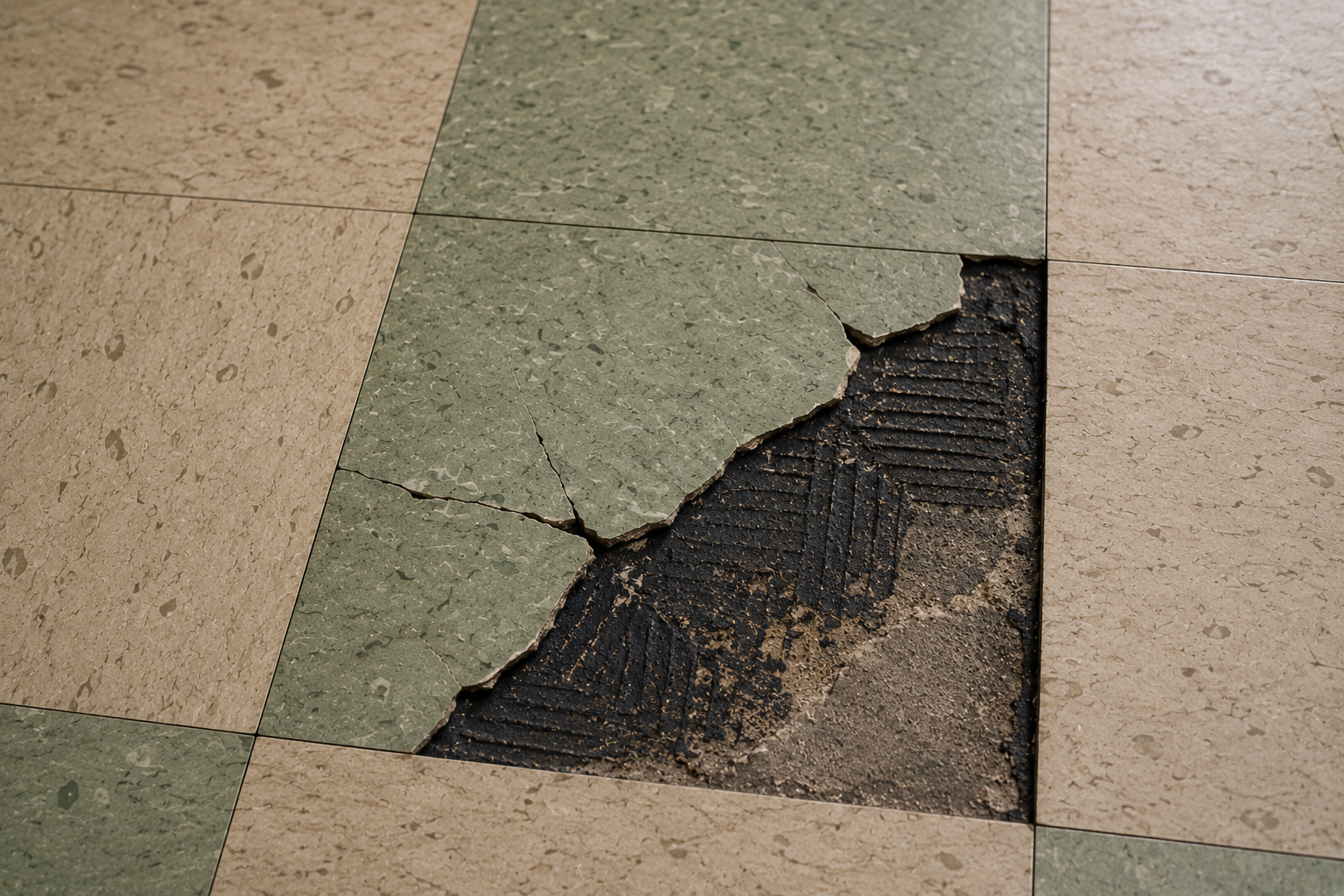
Intact floor tile may present a different concern than flooring that is broken, crumbling, sanded, ground, scraped, or aggressively removed. Many resilient flooring materials are relatively non-friable when intact, meaning fibers may be bound within the material. However, disturbance can change the risk profile.
Floor tile becomes more concerning when removal methods create dust or debris. Mechanical grinding, sanding, dry scraping, breaking tile into pieces, removing old mastic, or using aggressive demolition methods can potentially disturb suspect asbestos-containing materials. Deteriorated flooring, loose tile, cracked tile, or exposed adhesive may also require closer evaluation before renovation or removal.
In professional asbestos project work, flooring materials were often evaluated before renovation so that appropriate work practices, containment, disposal methods, and air monitoring decisions could be considered. This is especially important in occupied buildings such as schools, hospitals, offices, and public facilities.
Where asbestos floor tile was commonly found
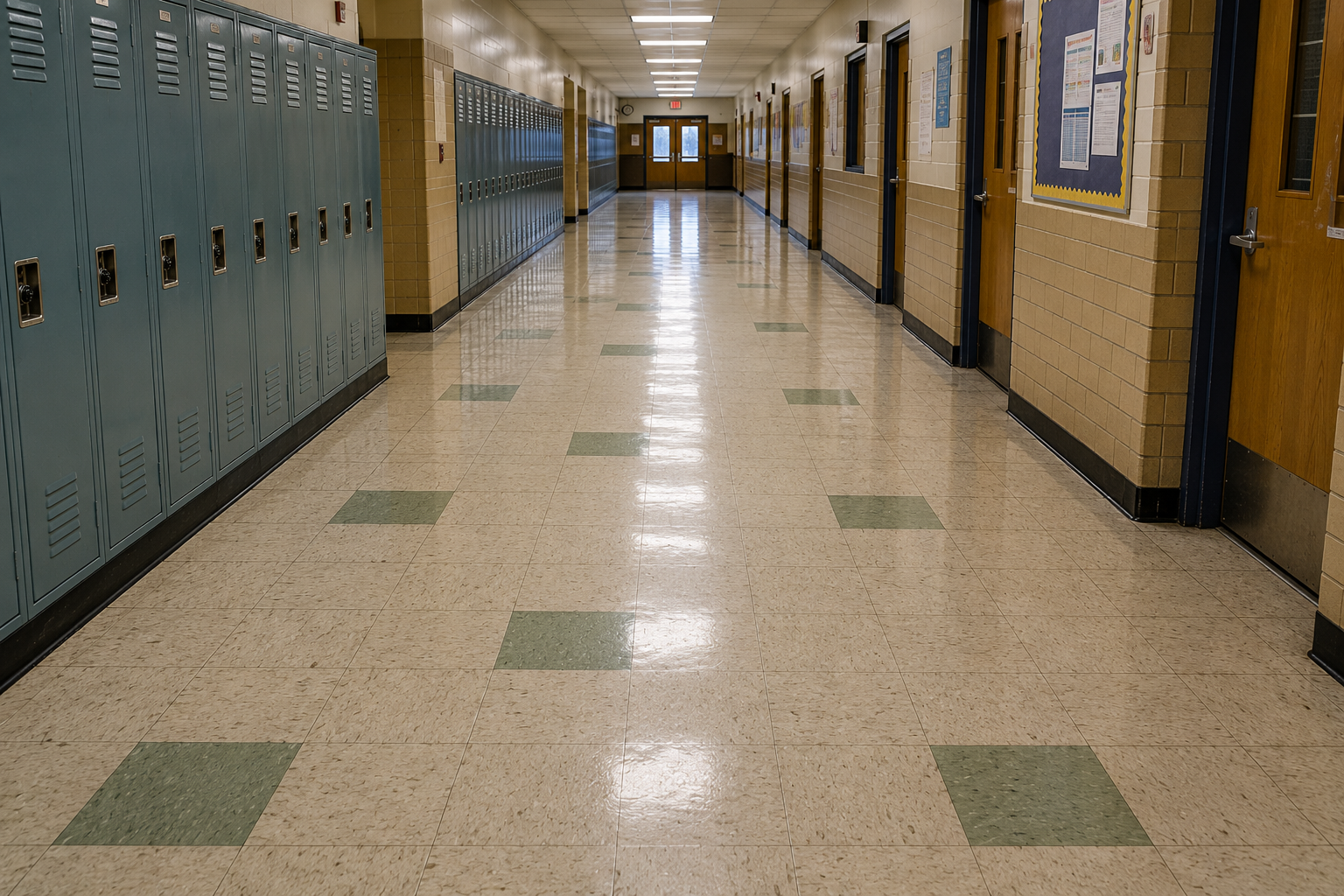
Older flooring materials were commonly installed in institutional and commercial settings where durable, easy-to-maintain floors were needed. Schools and public buildings are frequently associated with older resilient tile systems because many were built or renovated during time periods when asbestos-containing materials were widely used.
- Schools, classrooms, hallways, cafeterias, and offices
- Hospitals, clinics, nursing facilities, and support spaces
- Government buildings and public facilities
- Commercial offices, retail stores, and apartment buildings
- Industrial offices, break rooms, laboratories, and maintenance areas
- Older homes, basements, kitchens, utility rooms, and additions
Common misconceptions about asbestos floor tile
- Not every old floor tile contains asbestos.
- Tile size alone does not prove asbestos content.
- Black mastic may be suspect even when tile has been removed.
- Layered flooring systems may contain more than one suspect material.
- Laboratory analysis is typically required for confirmation.
Reminder: This content is for general education only. MesotheliomaClaims.us is not a law firm, does not provide legal advice, and does not provide medical advice.